
Big Oil in the Dock: Why Global Courts Are Now Driving Climate Accountability

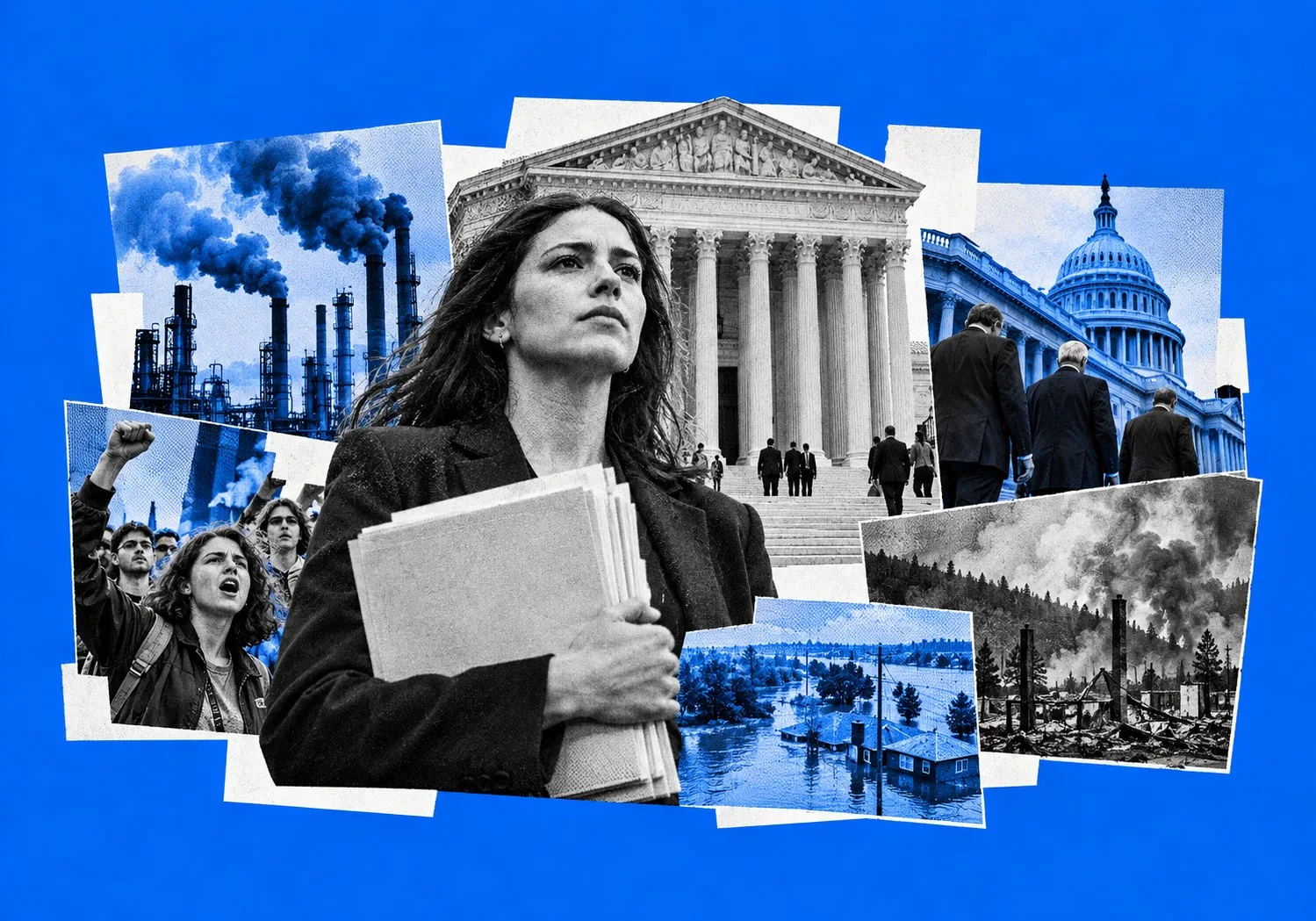
With international climate talks failing to deliver binding fossil fuel cutbacks, courtrooms across Europe, North America, and Australia have become the primary battleground for corporate climate liability. Major legal actions—ranging from American municipal lawsuits against ExxonMobil to European precedents involving TotalEnergies and Shell—are challenging traditional corporate defences. As international courts establish formal state obligations and attribution science links specific weather disasters to major carbon emitters, the judiciary is defining the financial future of the global fossil fuel industry.
Atmospheric concentrations of greenhouse gases sit at record highs. That single fact renders the 2015 Paris target—capping temperature rise at 1.5 degrees Celsius above pre-industrial levels—unachievable through current voluntary pledges.
National parliaments have largely stalled. Municipal dockets, conversely, are overflowing.
More than sixty local and state jurisdictions across the United States have now launched civil actions targeting oil majors.
Around two dozen of those cases sit frozen, awaiting a Supreme Court decision on whether municipal damages belong under state common law or within federal jurisdiction. "The stakes are extremely high for the future of all these two dozen or so pending cases," noted Michael Gerrard, director of Columbia University's Sabin Center for Climate Change Law.
If state courts keep jurisdiction over deceptive marketing and infrastructure damages, fossil fuel producers face liabilities on the scale of the 1990s tobacco master settlements. Justice Elena Kagan pointed to that exact precedent during oral arguments, describing Boulder’s claim against ExxonMobil and Suncor Energy as "the same kind of lawsuit against the same kind of actors for the same kind of harm."
Defense attorneys insist local judges cannot manage global atmospheric policy.
Addressing that point, Justice Brett Kavanaugh observed that allowing claims across dozens of jurisdictions "is going to bankrupt — you know, if there are enough of these — bankrupt these various defendants and certainly other defendants out there."

Beyond Washington
Washington is only one theatre in a global realignment. Over the past two years, three international bodies—the International Court of Justice, the International Tribunal for the Law of the Sea, and the Inter-American Court of Human Rights—issued advisory opinions confirming that states bear binding legal duties to mitigate climate damage. The African Court on Human and Peoples' Rights will deliver a fourth opinion shortly.
"A lot has been achieved in a short period of time," said legal expert Margaretha Wewerinke-Singh, who participated in proceedings before all three tribunals.
Advisory rulings lack direct enforcement powers in state-to-state disputes. Domestic judges are importing their reasoning anyway. Dennis van Berkel of the Climate Litigation Network notes that plaintiffs globally now use these findings to underpin local claims.
Consider Paris.
A district court cited the International Court of Justice opinion when directing TotalEnergies to account for end-use emissions in its corporate vigilance strategy.
In the Netherlands, another court drew on that same authority to order a revision of the national climate plan after residents of Bonaire, a low-lying Dutch Caribbean island, brought suit.
Both matters face appeal.
Meanwhile, Australia's High Court blocked a coal mine expansion in New South Wales on explicit atmospheric grounds.
"Despite what politicians say about the international legal system, judges still respect and apply international law in many countries around the world," observed Sophie Marjanac, legal director at Redwater Insights.
These legal actions no longer move sequentially; they hit simultaneously.
Margaret Young of the University of Melbourne points out that corporate exposure is no longer localized. Jasper Teulings of the Climate Litigation Network notes a tightening net around oil producers, even as corporate liability rules lag behind state duties.
Science Erases the Causation Loophole
For decades, toxic tort claims against energy producers crashed against a single wall: legal causation. Demonstrating that a specific company's output caused a specific storm or drought was scientifically impossible.
Attribution science changed that equation completely.
Modern climate modeling measures the precise statistical influence of human activity on individual weather disasters. Researchers can now assign carbon majors proportional shares of physical damages based on historical output data.
Equipped with these quantitative models, litigants are pushing claims across sovereign borders.
In Germany, a lawsuit brought by Peruvian farmer Saul Luciano Lliuya against energy producer RWE over glacier melting risks established a critical precedent. German judges declined to grant Lliuya an immediate monetary payout, yet they established that domestic courts can hold major carbon emitters accountable for climate harms occurring overseas.
Other European forums face similar dockets.
Typhoon survivors from the Philippines are suing Shell in the United Kingdom over disaster recovery costs. Residents of Indonesia's Pari Island brought proceedings against Swiss cement manufacturer Holcim over rising sea levels. In Germany, farmers affected by Pakistan's 2022 floods are pressing claims against RWE and Heidelberg Materials.
Corporate extraction operations face parallel scrutiny at the source.
Norway’s Supreme Court is weighing the statutory validity of North Sea offshore exploration licenses. In the Netherlands, legal analysts monitor a 2027 Supreme Court appeal in Milieudefensie v. Shell that will determine whether domestic judges hold the authority to mandate specific emissions-reduction targets for private multinational corporations.
Liability Shields and Legislative Pushback
Energy companies and allied legislative majorities have mounted aggressive counter-arguments to limit corporate exposure.
Lawmakers in American states including Utah, Iowa, Oklahoma, Tennessee, and Louisiana enacted corporate liability shields specifically designed to insulate fossil fuel producers from state climate claims. Similar statutory shield provisions have been introduced in the United States Congress to block local enforcement nationwide.
Progressive state legislatures are moving in the opposite direction.
New York and Vermont enacted "Superfund" laws requiring oil companies to fund municipal adaptation infrastructure directly, though procedural injunctions have tied up implementation.
Internationally, New Zealand's parliament passed targeted legislation terminating a climate lawsuit brought by Maori activist Mike Smith against six domestic firms—though Smith announced plans to pursue alternative legal avenues.
Attorneys representing municipal plaintiffs insist that local damage claims fit established common-law principles.
Kevin K. Russell, representing Boulder before the Supreme Court, argued that American states have retained sovereign authority to remedy in-border injuries since the nation's founding, maintaining that energy companies must "internalize a portion of the costs of their activities by paying for some of the damage that those activities inflict."
$100 Billion in Local Damages
Disasters linked to weather and climate generated over $100 billion in direct economic losses across the United States last year alone.
That sum strains municipal budgets, emergency response networks, and agricultural supply chains.
Local governments regard civil actions as an operational necessity to avoid shifting adaptation expenses onto municipal taxpayers.
Deirdre Macnab, a Colorado rancher running 600 Black Angus cattle, supports the Boulder lawsuit after regional wildfires killed livestock and drought pushed hay prices out of reach.
"This is food security, and it’s directly connected to climate change," Macnab said outside the Supreme Court. "And these corporations, if they are not held accountable, they’ll never come to the table and be part of the solution. They’re making record profits while people’s cattle are dying."
Middlesex County in New Jersey cited similar fiscal pressures in its newly filed action against fossil fuel producers, stating that local communities face repeated climate disaster impacts without federal relief.
Electoral majorities will swing.
Administrative agencies will rewrite rules with every change of executive power. Yet the steady accumulation of binding judicial rulings—backed by attribution science and international treaty interpretations—has forged an independent mechanism of legal accountability. As executive branches revise statutory decarbonization targets, domestic and international courts are setting the financial boundaries of fossil fuel extraction.
Sources: The New York Times, RFI