
Belgium’s ‘Plan B’ for Trump: How Europe Is Learning to Hedge Against an Unreliable US

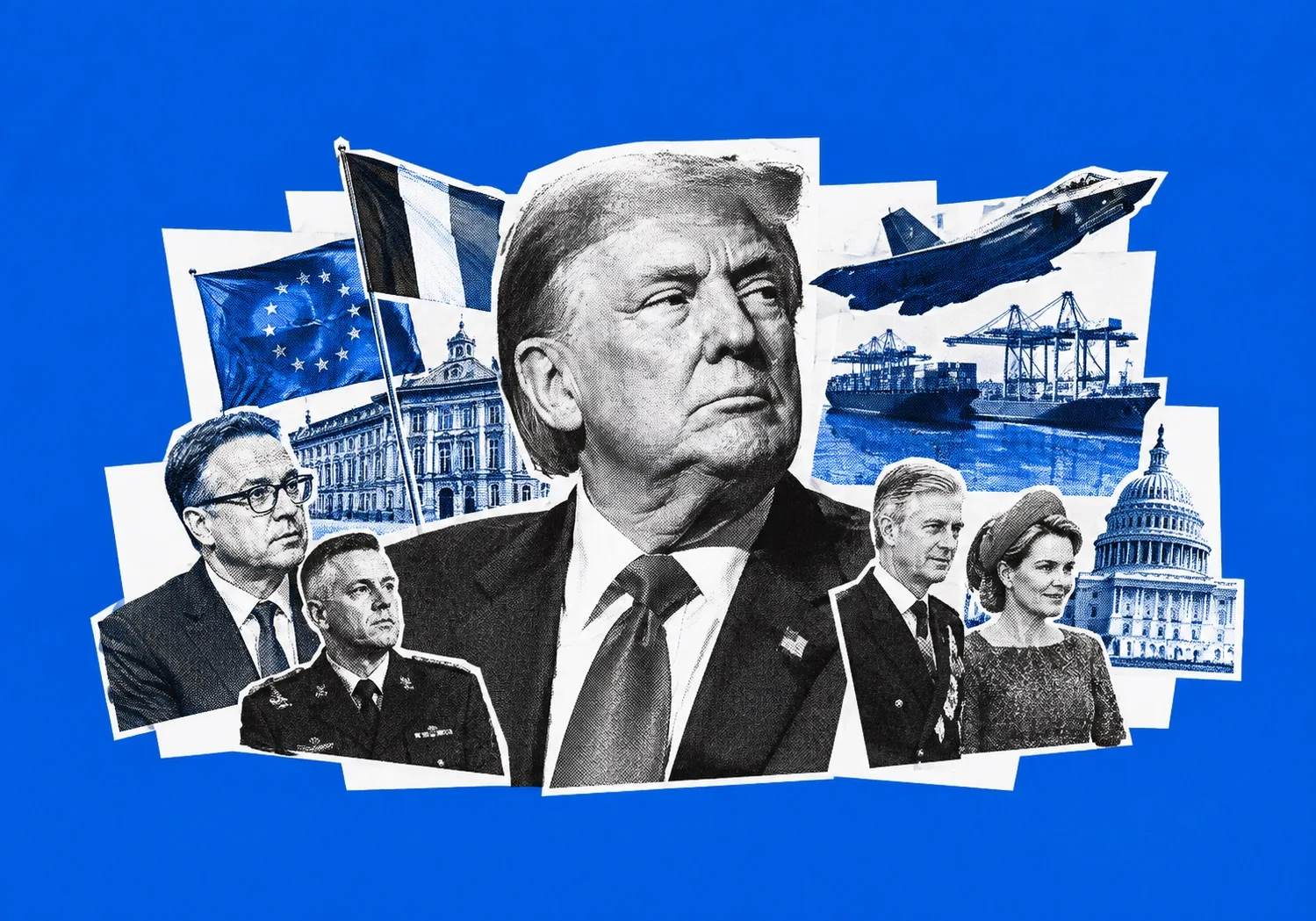
A leaked Belgian Foreign Ministry document describing Donald Trump’s US as "no longer a reliable ally" puts into writing what European capitals have long planned in secret: Washington can no longer be the sole foundation of European security and policy.
The strategy is not a plan to abandon the United States. It is more consequential than that. It is a blueprint for reducing exposure to decisions made by the US federal executive while preserving as many channels of cooperation as possible.
For a country that hosts the European Commission, European Council and NATO headquarters, that is a revealing shift.
From alliance management to risk management
Belgium’s response is built around a contradiction that is becoming harder for European governments to avoid.
Washington remains indispensable in areas ranging from defence to law enforcement. Yet the Belgian assessment treats political dependence on the White House as a strategic liability. The answer is therefore neither confrontation nor disengagement, but diversification.
That logic runs through the paper. Belgian diplomats are instructed to deepen contacts with Republican and Democratic governors, major-city mayors and Democratic members of Congress. The document also calls for identifying new generations of bipartisan American political elites whose influence may extend beyond the current administration.
The distinction matters. Traditional transatlantic diplomacy is heavily centred on national governments. Belgium’s proposed approach deliberately widens the field.
Governors and mayors become economic and political counterparts. Congressional opposition becomes part of a longer-term diplomatic network. European governments can maintain relationships with the United States without making the White House the sole gateway to American politics.
That is a form of political hedging.
It also carries a risk. A strategy that is designed to work around the federal executive could be interpreted in Washington as an attempt to undermine it. Belgium therefore pairs its outreach with what the document calls calibrated engagement, seeking to protect national interests without appearing openly hostile.
 The monarchy provides another channel. The strategy notes Donald Trump’s explicit respect for monarchies and treats Belgium’s royal institution as a diplomatic asset. King Philippe subsequently visited the United States for the FIFA World Cup in July 2026, while Queen Mathilde accompanied Belgian ministers to the UN General Assembly in New York in September.
Royal diplomacy is not a substitute for government-to-government relations. But in a more transactional political environment, Belgium is clearly willing to use every available channel.
The defence relationship is where hedging becomes material
The most tangible part of the strategy concerns military procurement.
The Belgian assessment recognises that buying American weapons can generate goodwill in the Trump administration. It nevertheless recommends systematically increasing purchases of European defence equipment to reduce dependence on Washington.
That turns strategic autonomy from a political slogan into a procurement decision.
For European defence manufacturers, the significance is straightforward. If governments begin treating the origin of military equipment as a strategic variable rather than simply a question of capability, European suppliers acquire a new role in national security planning.
For American contractors, the issue is different. The immediate effect of any individual Belgian procurement decision may be limited. The longer-term concern is institutional: once European governments begin designing procurement policy around reducing US dependence, the market itself becomes part of the transatlantic risk calculation.
The Belgian document also proposes greater diversification in energy, semiconductors and artificial intelligence. These sectors are treated not simply as areas of economic competition but as vulnerabilities that could become politically significant if Washington uses protectionist measures or trade penalties.
For Belgium, the exposure is particularly acute because its economy depends heavily on international trade and the Port of Antwerp-Bruges is a major gateway for global commerce.
Economic diversification therefore becomes another layer of alliance management.
Security cooperation is already more complicated
The most revealing parts of the strategy may be those dealing with policing and intelligence.
Belgium identifies counter-narcotics, organised crime and counter-terrorism as the clearest areas of practical cooperation with the United States. The overlap is substantial, particularly given the role of Antwerp in cocaine trafficking and synthetic drug networks.
Yet the document identifies fundamental differences in how the two sides approach these problems.
Belgian officials warn that Washington increasingly treats counter-narcotics as a military operation rather than a judicial one. That creates friction with European law-enforcement practices. The paper also links US cuts to foreign aid with conditions that can encourage cartel recruitment, while raising concerns about American approaches to cyber-surveillance and cryptocurrencies that can make financial tracing more difficult.
Judicial cooperation creates another problem: extradition or intelligence-sharing arrangements can expose European suspects to the US death penalty, something that presents a direct legal and political obstacle.
The document goes further on counter-terrorism, pointing to what it describes as the politicisation of US policy, including a “taboo” around the extreme right, tolerance of hostile narratives and attempts at foreign interference presented as freedom of speech.
Whatever the political interpretation of those assessments, their bureaucratic significance is clear. Intelligence and law-enforcement cooperation cannot be treated as technically neutral if the partners increasingly disagree about the legal and political boundaries within which that cooperation should operate.
That makes trust a practical variable rather than an abstract diplomatic virtue.
Belgium is building infrastructure for uncertainty
The creation of a specialised Transatlantic Platform inside the Foreign Ministry is perhaps the clearest indication that this is not simply an exercise in political messaging.
The platform is intended to bring together federal and regional ministers, trade agencies and diplomatic networks. Ministers including Foreign Minister Maxime Prévot, Defence Minister Theo Francken, Finance Minister Jan Jambon and Interior Minister Bernard Quintin are expected to calibrate high-level visits according to strategic risk-benefit assessments.
In other words, Belgium is attempting to make uncertainty administratively manageable.
That may prove more important than any individual diplomatic visit. Once governments establish permanent mechanisms for assessing exposure to a partner, the underlying assumption about that partner has already changed.
Belgian officials have sought to contain the significance of the leak. A Foreign Ministry spokesperson described the document as an internal working paper rather than an agreed strategy, stressing that assessing global shifts is normal and that the United States remains a core ally. Prévot’s cabinet has similarly argued that Europe must assume greater responsibility for its own security while maintaining pragmatic dialogue with Washington.
Those statements are not necessarily inconsistent with the leaked assessment. An internal planning document does not need to become formal doctrine to influence how officials prepare for different political scenarios.
That is precisely why bureaucratic documents can matter even when governments publicly distance themselves from them.
The European question is no longer whether to diversify
Belgium’s paper does not exist in a political vacuum. Across Europe, strategic autonomy has long been debated, with France among the most prominent advocates of greater European capacity in defence and other strategic sectors. NATO, meanwhile, remains the central framework for collective defence.
The Belgian approach sits between those two realities.
It does not propose replacing the transatlantic alliance with a European alternative. Nor does it assume that the current US administration will necessarily define the future of American policy.
Instead, it treats the relationship as something that must be actively managed across several layers: military procurement, industrial policy, intelligence cooperation, trade, regional diplomacy and political networks.
That is a significant conceptual change.
For decades, European governments could treat the durability of the US alliance as a foundational assumption and debate how much responsibility Europe should take within it. The leaked Belgian strategy starts from a different premise: the durability of that commitment itself must be incorporated into national planning.
The difference between those two approaches is not rhetorical. One produces alliance policy. The other produces contingency planning.
And once contingency planning becomes embedded in ministries, procurement rules and diplomatic networks, it becomes difficult to reverse simply because relations between governments improve.
Belgium’s strategy therefore points to a more awkward future for transatlantic relations. European governments may continue to call the United States a core ally, purchase American equipment and cooperate with US agencies. But behind that public continuity, they can simultaneously build relationships that do not depend on Washington, redirect parts of their defence spending towards European industry and develop economic alternatives in strategically exposed sectors.
The alliance can survive in formal terms while becoming less exclusive in practical terms.
For Washington, the resulting loss is not necessarily a dramatic diplomatic rupture. It is the gradual erosion of leverage: the knowledge that European partners are designing systems that allow them to keep functioning when US federal policy becomes unpredictable.
That is the institutional change revealed by Belgium’s leaked paper. Europe is not preparing to leave America behind. It is preparing for a transatlantic relationship in which relying on America alone is no longer considered safe enough.