
Andy Burnham’s New Information Defence Unit Faces a Cold Truth on Russian Disinformation

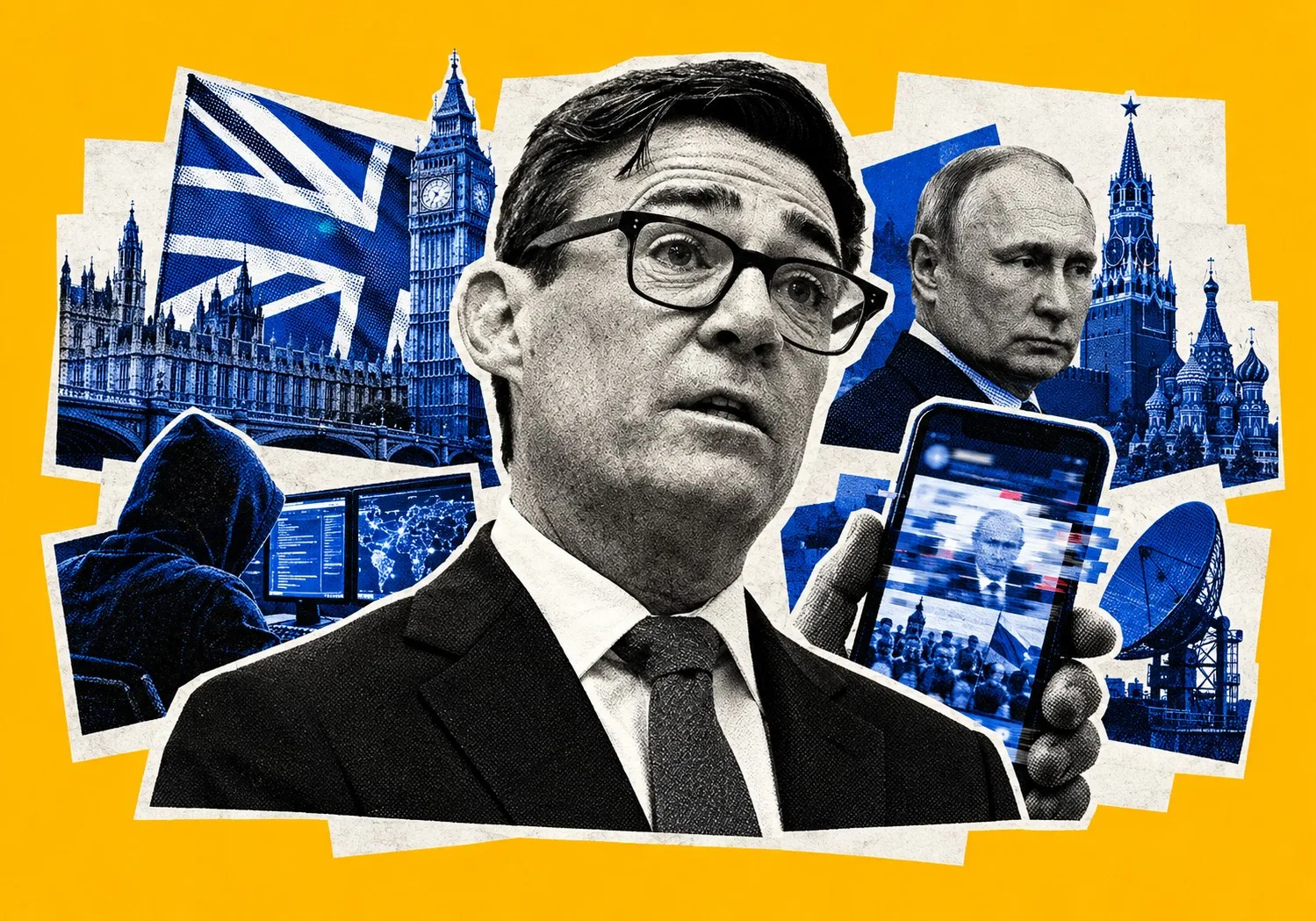
London’s decision to treat Russian propaganda and AI deepfakes as a hard national security threat marks a permanent institutional shift. But by creating the new National Centre for Information Defence to shield the electorate, the state is walking straight into a political minefield.
In his maiden address to the United Nations General Assembly in New York, the UK Prime Minister Andy Burnham bypassed conventional diplomatic pleasantries.
 Britain is losing control of its domestic information environment, and Whitehall is finally stepping in to seize the wheel.
With the announcement of the new National Centre for Information Defence, Downing Street is rewriting its counter-intelligence playbook.
Security chiefs face a direct mandate to treat Russian hybrid operations as hostile non-kinetic aggression rather than mere political white noise.
By calling out the Kremlin for an industrial-scale assault on democratic structures, London has discarded the old liberal belief that basic fact-checking can keep voters safe.
Burnham said recent years have seen “an industrial-scale assault by hostile actors on the information environment” in both the UK and many of its allies.
“Russian agencies have used every means at their disposal to spread lies and disinformation and prey on people’s fears”, including through the use of bots, fake websites and falsified news articles, the UK Prime Minister said.
Whitehall is executing a profound structural pivot.
Digital narrative control is now being placed on the exact same footing as defending British airspace or patrolling the North Sea.
Spearheaded by the Cabinet Office alongside police and intelligence services, the new unit will spot, attribute, and shut down foreign operations proactively.
For over a decade, Western capitals relied on bureaucratic inertia, issuing warnings while politely asking Silicon Valley moderation teams to clean up feeds.
It was an extraordinary mismatch of resources against a Kremlin media apparatus backed by roughly £1.3 billion (€1.5 billion) a year, as Burnham maintained.
Moscow’s Rebuke
The response from Moscow arrived with predictable swiftness following the UN summit.
The Kremlin dismissed the UK Prime Minister's address as an utterly short-sighted policy, accusing London of stoking total Russophobia.
Speaking to reporters in the capital, Kremlin spokesman Dmitry Peskov claimed that Britain and its European allies were deliberately choosing escalation over de-escalation.
From the Russian perspective, framing hybrid challenges as state-backed aggression only deepens continental division, ensuring that Moscow will lean aggressively into the resulting diplomatic friction rather than alter its course.
When Online Fiction Becomes Street-Level Reality
The cost of that complacency is no longer confined to policy papers; it is playing out on British streets.
Kremlin-backed actors have systematically cloned the branding of 28 national institutions, including major universities and the BBC, to host fabricated reports.
These synthetic pipelines amplify domestic fractures directly.
Following the murder of three young girls in Southport, foreign networks immediately flooded digital channels with false identities and inflammatory far-right outrage until violent riots tore through English towns.
Hostile campaigns routinely home in on economically depressed areas and alienated youth, flooding social feeds with relentless messaging about institutional collapse to erode societal trust.
The AI Multiplier and Anglo-American Alignment
Consumer-grade artificial intelligence has turned a complex intelligence challenge into an administrative routine.
Generative audio and deepfake video mean orchestrating high-impact influence no longer requires massive infrastructure—just an internet connection and cheap processing power.
Recognising this escalation, London is locking arms with Washington. A new bilateral partnership focuses squarely on insulating critical infrastructure from AI-generated threats while lobbying for stringent international governance frameworks.
Walking into a Domestic Political Minefield
Yet this security pivot drags the administration straight into a domestic trap.
Any state mechanism designed to tag and neutralise digital information inevitably forces officials to draw subjective lines around public debate.
Defence Secretary Wes Streeting spent a morning on national radio doing heavy damage control, insisting the unit targets hostile foreign actors only and will never police domestic dissent.
Those assurances gained little traction with the political opposition.
Reform UK leader Nigel Farage immediately framed the initiative as a backdoor censorship engine aimed at crushing right-wing dissent.
Analysts at the Royal United Services Institute note the bitter irony: Russian operators do not need fresh conspiracies when domestic politicians are eager to turn national security into a culture war.
European Precedents and Foreign Field-Testing
Parliamentary backing remains solid despite the domestic noise.
The House of Commons Foreign Affairs Committee had already pushed for a public-facing counter-disinformation agency, mirroring France's VIGINUM and Sweden’s Psychological Defence Agency.
London has already field-tested this tradecraft abroad, quietly assisting Moldovan security teams in blocking Kremlin-backed financial flows during national elections.
By institutionalising these capabilities at home, Britain intends to position itself as the primary exporter of counter-disinformation expertise to vulnerable European allies.
Strategic Winners and the Ultimate Test
This expansion creates an obvious set of beneficiaries. Intelligence agencies like MI5 and GCHQ secure broader remits and funding, while private defence contractors specialising in deepfake detection stand to win lucrative public tenders. Russian intelligence units, conversely, face a much steeper climb to run covert assets without risking public exposure or targeted sanctions.
The true test of the National Centre for Information Defence will not be measured by how many bot farms it neutralises, but whether it can police digital borders without devouring the open discourse it was built to protect.
Sources: BBC, Reuters, UN News, UK Parliament